#rablogweek 4 – The Pain of Pain Meds 

The pain of pain meds – Pain medication prescriptions are difficult to obtain and scary to use. What horror stories do you have because of new laws? Maybe you have been treated badly at the pharmacy or by family members? Tell your story today.

I saw today’s prompt and it immediately reminded me of how lucky we are here in the UK. I’m sure many patients here are unaware of just how difficult it is for our fellow patients, in America particularly, to obtain pain meds, or even just their RA meds. 

I’ve never walked into a doctors appointment thinking how much is this going to cost me. I’ve never been refused pain medication. I’ve never had to choose between getting this month’s meds or buying food or petrol. I’ve never had to be drug tested before being prescribed the next months pain relief. Unfortunately all of these are everyday day realities for RA sufferers in the US. 

I’ve posted previously about pain meds, and no doubt will do again, it’s a topic that is unfortunately treated with disdain and judgment by many, including the more ignorant amongst our  journalists and politicians out there who happily call us addicts with no knowledge of the very real decisions we take daily about our pain relief. 

I often think the biggest misapprehension about pain meds is that they take away the pain.I wish! What they do is dial it down. Think of it as listening to music really loudly, then turning the volume from 10 all the way down to 2. It’s still there in the background, but at the lower level you can work around it, and get on with your day. 

Second annoying misapprehension? We’re all getting high. Cue loud ironic laughter from across the chronic pain community. I have never gotten high from a pain med, not even opioids which I use daily. I’ve been nauseous, and occasionally even vomited.  Not exactly tempting me to up the prescribed dose or take extra for a laugh. Yet that is my choice when my pain is really severe, I can take oxycodone and stop wanting to cut a limb off, knowing that instead I’ll feel severely nauseous for the next hour.

But – at least I can get my medication. My GP prescribes my pain meds without fuss.  I’m guessing this is because we have a good doc/patient relationship, we discuss regularly how I’m doing and she knows I don’t overmedicate or abuse my pain meds ergo I have no problem with getting them. 

I honestly don’t find using pain meds scary. Maybe because I see them simply as one of the tools in my RA toolbox, they sit there alongside heating pads, voltarol gel, my RA meds, compression gloves, wrist splints, crutches, meditation, aromatherapy etc. 

I also don’t buy into the addiction BS that the press tends to throw around. I don’t know the figures for the UK, but I do know in the US addiction rates among patients who are prescribed opioids is less than 4%. Opioids just aren’t the big scary med they are made out to be. I worry more about the potential effects on my liver. 

So, yes, I will continue to use my pain meds, and I will do so without any shame. I will also continue to try and educate anyone who chooses to judge me, or anyone else,  for making an informed and rational decision about how I manage my pain. Walk a mile in my shoes….. 

#rablogweek 3 – Coping with Depression 

Coping with depression – How do you manage the inevitable lows of having RA? Do you view RA as being forever or do you look forward to remission? What are the best ways to cope with the depression associated with RA?

I’m choosing a Wednesday Wildcard, simply because this is a subject so close to my head and my  heart. I suffered with depression for a while before RA, but for a few months last year the whole RA ‘package’ sent me spiralling downwards again. 
One doesn’t expect to be pottering through life one minute to have everything torn away from you the next. Over a few short months I lost my health, my mobility, my career, my income, my social life, my home, my identity and my sense of who I was. 

I simply couldn’t see a way forward. I’d worked so hard to build a career and had (as I think many people do) based my sense of self on my job. I was a regional manager, I travelled and project managed, I worked a million hours a week and I was known for being organised and capable. I couldn’t see who I was without this, and worse I couldn’t find any sense of self worth, I’d lost my value. 

Add in new medications, side effects, homelessness, constant pain and incredible fatigue and you can see why things looked black. 

I’ve more than once seen people comment that a chronic illness diagnosis starts the grieving process and it’s so true, you’ve lost your ‘life’, there is no cure, you mourn what you were and focus on what you can no longer do.

You certainly go through the five stages of grief – denial, anger, bargaining, depression and acceptance – but these are not linear and we can find ourselves returning to any one of these stages at any time. 

  • Denial faded quite quickly for me, the sudden plethora of medical appointments and tests don’t allow you to ignore what’s happening 
  • Anger is one many people get stuck at. In the short term anger is useful, it makes you question and plot and plan, but over a longer period is definitely not healthy
  • Bargaining was for me a slightly weird stage, you find yourself praying to any power available, you promise to eat healthier, stop smoking, stop drinking, get more sleep – anything to take the pain away 
  • Depression is very closely linked with RA, and as too many of us know it creeps up on you then settles in 
  • Acceptance is so very important for our mental health, but it’s a hard one to do. It’s taken me some months and some fantastic therapy, but reaching this stage is incredibly freeing 

I view my RA as a lifelong condition, there is no cure and treatment may slow disease progress but it won’t make it go away. So bearing this in mind how do we cope with the depression? 

  • Medication. It’s vital to speak with your GP as soon as you realise depression is with you. Mine is incredibly supportive, and when the antidepressant I’d been on for a couple of years with good results seemed to stop working once I added RA to the mix we discussed this together and changed my medication, it’s made a world of difference 
  • Talking Therapy. I am such a passionate advocate for accessing professional mental health support. I used some NHS provision which was group therapy and a great start,  but I felt I needed more so paid privately to see a psychotherapist. She’s changed my life. It’s that big and that important. Yes I still have low days and suffer with anxiety, but I also have tools to help me through 
  • Lose the guilt. I see so many people who blame themselves for not being able to live as they were, they feel they’ve become a burden on their families and friends and are no longer worthy of being loved because they can’t cook or clean house or make the school run. This is not our fault, we didn’t ask for this, and guilt is a very destructive and pointless emotion 
  • Friends. It’s so important we make the effort to keep in touch with people. And it’s so hard because depression makes you want to shut out the world, add in fatigue and pain and it’s so very easy not to leave the house. Yes I’ve had to cancel arrangements at the last minute (more guilt) but my friends totally understand and have been amazing. 
  • Leave the house. Isolation becomes a default setting very quickly, especially if like me you can spend days in bed due to fatigue. On better days I consistently  make myself go out. Fresh air, change of scenery and being around people can make such a huge difference, you feel like you are part of the world again 
  • Hobbies keep us feeling productive and get the brain ticking over. Yes, we lose some, I adored cooking and can no longer manage it, but I’ve found others, I do crosswords, write my blog, run my Facebook RA page,  knit on days when my hands allow and have rediscovered a love of reading that I never had time for. 
  • Music! Sing, chair dance, whatever floats your boat but music can really lift your mood when nothing else will 
  • Practice Gratitude. A tip from my therapist which really works. Every night before I go to sleep I run through the things I’m grateful for that day. I found this so hard at first, I would grumpily be grateful for a warm bed and pain meds! But it was a start, and with daily practice it becomes so easy – my friend called, my cat made me laugh, it was sunny, I love my new book, my cleaner has been! You will discover more and more every day. And if on bad days it’s bed and pain meds that’s OK too 
  • Meditation has been a wonderful discovery for me. I started with simple breathing exercises shared in group therapy, found a great meditation app and hit you tube for suggestions. I could do better, on bad days I don’t always practice, but on the days I do it really lifts me 
  • Find Acceptance. It takes some soul searching and a change of thinking but it’s the most important step forward after diagnosis. If you am e constantly hating your body, your illness and what it’s taken from your life you will absolutely feel awful. It was a stupidly simple phrase that did it for me, ‘Don’t ask why me, ask why not me’ 
  • Find your tribe. There are some wonderful online support groups that offer friendship, advice, shared experiences, validation and a safe place to vent when needed! Facebook has some good ones and they are private so your friends/family won’t see your posts. I think I’d have gone crazy without my RA tribe 🙂

    #rablogweek 2 – Active vs Reactive Patients 

    Active versus reactive patients – We usually start as naïve and trusting patients, then at some point we realize we must take an active part in our own medical decisions. Tell the story of your move to active patient or why you are not there as yet.

    I was wondering last night where to start with this one, and I’ve just seen a lovely example of the difference on a forum in a thread about recording and understanding our regular blood test results. In fact I’m wanting to add in a third definition, passive patients.  

    So, what do we actually mean by Proactive, Reactive or Passive? Bear in mind these definitions are mine, others may have perceptions that are different but just as valid. So in my head alone….. 

    • Proactive patients research, discuss, prepare for medical appointments with lists, diaries and questions and engage with their rheumatologist in a two way discussion.  They understand what their blood counts mean. They feel a responsibility to manage their health care and this makes them feel empowered. They say “I record my test results every time, I like to keep a close eye on things” 
    • Reactive Patients wait to be told by their rheumatologist what to do, they attend their appointments and will often feel anxious or angry afterwards because they weren’t able to express themselves fully or ask the questions they wanted to. They believe their rheumy is responsible for their healthcare. They say “my rhuemy just says ‘bloods are fine’she never discusses them” 
    • Passive patients aren’t really interested in their disease beyond basic daily survival tools. They don’t want to know the details, don’t see their disease as important and they’re happy to just collect their meds and take them. They feel apathy towards their RA, which is why they’d say “Can’t be bothered with my results, not filled my bloods in the book for 8 years”

    I think from the start of my symptoms I moved to proactive fairly quickly, it’s just my natural coping mechanism. I know I was initially passive in the strange and scary medical environment I unexpectedly found myself in, and probably unusually for me I temporarily felt I’d lost my voice (metaphorically), I just didn’t feel able to speak up without a good level of knowledge behind me. I was also having bad anxiety attacks. But I made sure I learnt! I had certainly become fully proactive by the time I ‘fired’ my first rheumy. 

    Has being a proactive patient helped me? Yes, absolutely. I insisted on a new rheumy and now have a good relationship with her. I insisted on a Fibromyalgia examination and got the diagnosis I had suspected. I meet regularly with my GP who can keep an overall eye on my various medical conditions. I obtain print outs of my blood test results and I know how to read them and which ones indicate disease activity. I have researched, joined forums, asked questions, attended an NRAS conference and now blog regularly. 
    All of this has helped me slowly  find a form of acceptance of my disease and my disability. Has it made it easier? Hard to say, for me knowledge is power, others are perfectly happy to be guided along and not concern themselves with the details. I think the most important approach is to take the road that makes you feel happy. 

    #rablogweek 1 – Starting Stories 

    Starting stories – tell us about your diagnosis, what were you thinking, feeling or when did you first know something was wrong?

    I’ve very deliberately not looked back at my earliest blogs before writing this, I kind of wanted to tell my story from my viewpoint now, not be influenced by my thoughts of early 2015. This of course means memory errors are likely when it comes to dates etc, but I’ll not let that stop me 😉

    In September 2014 I clearly remember a conversation with a friend who had noticed I wasn’t my usual self. I couldn’t put my finger on it, I just felt kind of run down, not quite right,and I’d started getting night sweats. Towards the beginning of December I still felt the same and booked an appointment with my GP.
    The day before I saw her I said to a colleague I must have banged my left hand, it felt sore. I woke up the next morning in agony. Both my hands were swollen and I could hardly move them, and my left shoulder had seized up overnight so badly I couldn’t move my left arm! This of course was very timely as my GP got to see my first flare.

    She immediately suspected RA, and arranged a referral to a rheumatologist. That first appointment happened around the end of January, and in the meantime being me I’d hit Dr Google hard and was convinced it was RA myself, or possibly lupus, neither of which looked good.

    Prior to this I knew nothing about RA, and if asked I would have said it was sore joints! As I gradually found out this was far from the real picture. The first time I saw my rheumy she ordered a number of bloods and xrays of my hands and feet. I think it was February when I returned and got the official diagnosis, and by this point things had got steadily worse.

    I was getting pain and swelling in a number of joints, and starting to suffer from severe fatigue and brain fog. My job as Head of Leadership for a training company involved staff and contract management, and a lot of travelling. I was repeatedly losing the thread of conversations mid sentence, which was particularly embarrassing during staff reviews when clear communication is obviously very important.

    I started methotrexate around this time, having been ‘promised’ that in a couple of months I’d feel back to normal. I’m still cross to this day about the rheumy making a claim that she should never have uttered as there simply are no guarantees with RA meds. If you’re interested mtx is still considered the gold standard for RA treatment and works brilliantly for around 50% of people, so don’t let me put you off!

    This led to me feeling over the next couple of months that I was slowly going mad. I wasn’t feeling better, my pain and fatigue levels were increasing to the point that by mid March I was crying on the way to work and then home again because of the pain, and almost falling asleep in meetings. I became increasingly worried that driving the long distances I had to was dangerous, my concentration was shot and I was having to pull over frequently for fresh air and coffee to keep me awake.

    My GP convinced me to sign off work for a couple of weeks, and I had my third appointment with the rheumy who had in the meantime given me steroids to ‘help’ the methotrexate. At this appointment I explained how much worse things were to the extent I couldn’t work, and her response was if the steroids weren’t making me feel better then there was no RA pain and I was imagining it. I left her office in floods of tears and refused to see her again. I felt like I was going insane.

    It took my own research to discover that around 30% of RA patients are steroid resistant which meant they would have no effect – I’ve also has steroid injections fail me so my GP agrees they just don’t work for me at all.

    I remember the worry and confusion I went through during this period quite well, and I sincerely hope others find a rheumatologist with a much more sympathetic approach – if not, change. This is such an important relationship and more than anything else at this time I needed to feel validated, I was not imagining my symptoms and I really needed open, honest discussion and support from my consultant. She let me down badly. You can read about this here

    I fortunately found a couple of fabulous RA support groups on Facebook during this period, and was soooo relieved to know I wasn’t alone, and to find somewhere safe and private to ask questions, vent or just share symptoms. It’s not exaggerating to say these groups saved me, they gave me the validation I needed, along with years of shared experience and advice, for which I’m eternally grateful.

    RA & I are in a relationship II

    Just over a year I posted a slightly tongue in cheek blog on this topic, and it occurred to me today when I saw this couples quiz that it would be a nice  follow up as well as a very fitting tribute to our continued commitment to each other!

    Thanks to my lovely spoonie sister Erin for this, I immediately  wanted to answer for myself and my life partner, RA. 

    Couples Survey 👫❤ Do the Survey I’m Curious!!! 
    What are your middle names? Emma and Autoimmune 

    How long have you been together? Nearly two years now 

    Who asked who out? Neither, I was ambushed! 

    Do you have any children together? Yes, Anger & Depression, but thankfully they’ve both moved out for now! 

    What about pets? Two, Pain & Fatigue, unfortunately both  very disobedient and I’d love to get rid but RA won’t hear of it, says they belong together. 

    Did you go to the same school? No, RA definitely learned sneaky tricks somewhere else! 

    Who is the most sensitive? Me! Even when I really rant RA promises to never leave me. 

    Where do you eat out most as a couple?Not so much where as when, RA won’t do evenings so tends to be a compromise lunch!

    Where is the furthest you two have traveled together as a couple? Cyprus, and RA bitched all the way there and back, seats weren’t comfy enough, plane was too noisy, food was dreadful. Unfortunately RA is a constant nag. 

    Who has the worse temper? Definitely RA! Flares up at a moments notice and sulks for days after, it’s very annoying 
    Who does the cooking? Neither of us, RA put a stop to that, it’s a rarity now. 

    Who is more social? Me, RA is crap at spending time with others, grumbles all the time I’m talking. 

    Who is the neat freak? Me, RA couldn’t care less 

    Who is the most stubborn? Close call, some days I give in for a quiet life! 

    Who hogs the bed? Me, RA prefers the sofa and sleepless nights, but we’re working on that together 

    Who wakes up earlier?RA for sure, always alive and kicking when I wake up! 

    Where was your first date? We met at  work in Newport, RA came home, spent the night, had a total flare up the next morning and hasn’t left me since, very committed to me. 

    Who has the bigger family? Me, because of RA. RA unfortunately sees a lot of other people as well as me, but that’s been good because we can get together and vent about what a pain in the arse this relationship is. 

    Do you get flowers often? No, but RA gives so much in other ways 

    How long did it take to get serious? About three months, then I gave up work to spend more time with RA 

    Who eats more? We don’t have a brilliant appetite, but since meeting RA Nausea has become a close friend 

    Who does the laundry? We share this task, it’s painful! 

    Who’s better with the computer? Me, me, me! 

    Who drives when you are together? Me, with RA constantly grumbling in the background or prodding to remind me he’s there, it’s very annoying and makes long journeys impossible 

    Who picks where you go to dinner? RA. So we stay at home 

    Who is the first one to admit when they’re wrong? Neither of us, I’ll never back down, but RA won’t either, it’s our biggest problem 

    Who wears the pants in the relationship?Too close to call! 

    Who has more tattoos? Me, I have three but one is of course to remind me of RA 

    Who eats more sweets? I’m definitely blaming RA here, I didn’t really have a sweet tooth before we got together! 
    Who cries more? Me. Definitely me. 
    As always my thoughts aren’t to be taken as medical advice, and should today be taken with a large pinch of salt! 

    WEGO Award Nomination! 

    I am chuffed, delighted and honoured to have been nominated for this year’s WEGO Health Activist awards for my Blog!

    When I first started this blog I was fully prepared to get half a dozen views or so, I had no idea it would turn into something nearly 7000 people from all over the world would access! 

    Over the last 18 months or so I’ve published over 50 posts, and every one has led to me being genuinely touched by the comments and replies I’ve received.  Sharing my personal journey has led me to make some fabulous online friends which I’m eternally grateful for. For every time I post I see another viewpoint or hear another’s story, it’s been a two way process all the way, I love and appreciate every person who chooses to share with me in return. 

    This is where I say with all honesty I am genuinely delighted to be nominated, it means the world to me, I actually cried when I received the notification. 

    However if you’d like to vote (endorse) my nomination I would be very grateful! 

    https://awards.wegohealth.com/nominees/12683

    Patients, not criminals 

    ​Interesting and thought provoking article from Piers Morgan on the current opiate situation in the USA. However I’m in two minds here. The illegal sales and addiction and over prescribing absolutely have to be dealt with effectively. 

    However….by taking a play to the popular media stance the US government has sadly started treating genuine chronic pain sufferers like criminals. I speak regularly with a large number of people in the US, mainly with RA, but also other chronic pain conditions. There is no cure. There is no way out. 

    The US media has in my opinion completely misunderstood and misrepresented the difference between dependence and addiction, just calling all opioid users addicts. 

    I rely (am dependent upon) two opioids to allow me to achieve some level of comfort daily. Tramadol for regular daily use and oxycodone for breakthrough pain (when tramadol is not enough).  I am in no way addicted to either of these drugs – to be honest I don’t see the attraction. Tramadol just dulls my pain with no other effect at all, and if I on rare occasions need more than two doses of oxycodone a day (well under what my prescription allows) I feel very nauseous and slightly dizzy, neither of which are a pleasurable experience. I literally have to make the choice between turning down the pain and feeling sick or putting up with the pain and wanting to scream. Hobsons choice. 
    Maybe I’m doing it wrong(!), maybe I don’t have an addictive personality, maybe my body metabolises drugs more efficiently, but I certainly have never gotten high (before oxycodone I used morphine but the nausea turned to violent sickness after one dose which is not amusing). 

    Am I dependent on these drugs? Absolutely.  I have multiple joint damage, cervical and lumbar spine problems all from RA. Should I have to sit here in agony because some idiot wants to get high using the same substance? Absolutely not. Leaving patients in pain when there is an effective drug available is inhumane. 

    Yet that’s exactly what’s happening to my friends in the US. I’m talking about doctors and consultants refusing to prescribe pain relief. Patients being sent to specialist pain clinics. Middle aged housewives being asked to take urine tests every four weeks before they can get their next prescription. Disabled patients having to travel distances in discomfort just to get to the nearest person who will prescribe them pain relief. 

    Yes, the massive over use of opiates needs addressing, but there must be some way to not make patients feel like criminals just for wanting some relief.

    As usual thoughts are completely my own and do not proffer medical advice. 

    Bioelectronics – my new favourite word! 

    ​I’d had a heads up from an RA group (thank you guys) that on an episode of the BBC’s Trust Me I’m A Doctor yesterday they were covering a ‘possible cure for RA’.  I was a little sceptical but hit the record button and have just watched it through. 

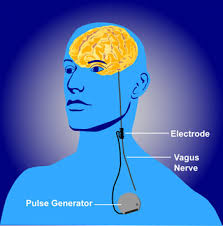
    The discussion was looking at the as yet not widely tested Vagal Nerve Stimulator. The item was actually much more informative than I was expecting (call me cynical!), they opened by saying “RA & MS are serious autoimmune conditions”, which I loved because unfortunately RA is so often underplayed. 

    I won’t go into the science, partly because I’d get confused and mainly because the wonderful BBC have posted it online word for word – the link can be found here

    I’ve seen previous brief articles on this subject but I hadn’t realised the science has moved to the stage of being ready for large scale trials, which if initial results are borne out has fantastic potential. (Of 17 patients in the original trial two thirds have achieved clinical remission). 

    Pending results of the next stage of trials this device could be available to patients in Europe in just four years time, and in five years for the US. Of course it can’t heal previous damage, but for those whom DMARDs and Biologics have failed, or who are suffering severe side effects and high infection risk, this is a real new hope. 

    This is incredibly exciting, four years is really incredibly close. Although at present this device works on the TNF cells, there are hopes it will be adapted to act on others too.  Further research is ongoing to test what other diseases, such as MS, can also be controlled by these devices. 

    Bioelectronics is my new favourite word. As always, fingers metaphorically crossed! 💙

    As always opinions are mine, I’m not & never will offer medical advice. 

    The Unexpected Outrageousness 

    I find myself thinking on the big stuff this afternoon, a mixture of a few friends recent story of illness and a slightly rose-tinted memory of carefree days before all the adult stuff came along and stole the freedom. I don’t mean I’d change anything, marriages, lovers, friends, & family have all come, and some have gone on or melted into faded snapshots of another time, all an essential part of me in their way.

    I just had a moments hunger for that freedom we feel at say, 17 or 22 when you are still far too young to have your shit together, but gladly still too young to notice. The world is yours, the years lie ahead to be filled with anything you can imagine and love comes easily and quickly without doubts and worries beyond tonight. I don’t think we ever feel again as free as we do in those early adult years, though perhaps it is only felt so deeply with hindsight, viewed with sepia tones.

    I am blessed to have a few very close friends that I would literally trust with anything. Some are newer by comparison, but some go back to those earlier memories of late late nights, too much wine, lazy Sundays, passionate conversation and laughter that cramped you over with a pleasurable ache.

    The paths we’ve followed since have been meandering and varied, I’ve seen careers grow and change, babies born and come to early adulthood, and loving relationships grow beautifully strong, or be ended by death, neglect or ennui. All of these changes, the loss, the grief, the growth and the joy are what you expect, life moves on and we accept and learn to roll with the punches. In the same way perhaps the loss of a pet helps prepare a young child for grief, the early teenage relationships and heartbreak are preparation for the pleasurable hell that is serious dating.

    Nothing prepares you for serious or chronic illness. Certainly at 17 or 22 I never imagined that I or one of my friends would end up being sick. Properly medical hospital type sick. As it happens I have my own illnesses, and a beautiful friend has been sent far harder trials.

    We met today. I was trying to describe or capture just for a moment the beauty that exists in being able to sit and laugh, really laugh with her at the whole damned medical process, the tests, the letters, the constant appointments, the drugs, the morbidity and the side effects, the reduced life expectancy, the medical dictionary your mind becomes in your relevant field, and the phrase that came was ‘we were laughing at the unexpected outrageousness of the roads we travel’.

    The Unexpected Outrageousness.

    Sometimes a phrase can just capture a feeling. Being serious and sad can sometimes have it’s moments when you’re facing the reality of the fragility of life head on, but what’s far more important and appropriate is laughter.

    Yes, life has become bloody outrageous, the kind of outrage that makes you want to punch the earth and scream at the sky. And instead by reaching deep inside for the shared humour that says f*ck this, for the ridiculous medical farce life can become, you find that 17, that 22, and laughter cramps you again with that pleasurable ache. May we live forever.

    When less becomes more

    I realised this week that I’ve been blogging about RD for over a year! So much has happened in that time, the blog I wrote this week last year, Living in Limbo, was about finding myself homeless, things were certainly very up in the air and nothing felt solid or stable.

    I’m very grateful to have had some amazing support since then, I’m settled in my little bungalow with my cats and feel on a much more even keel. Constant change is unsettling, especially when it’s not because of choices we’ve made.

    I’d say my key word for the past twelve months has been ‘acceptance’. It’s been a long process but it’s definitely the fulcrum around which my improving mental health resolves… I can feel a whole separate blog there 🙂

    It’s often the simple things that can resonate with us the most. A conversation with my psychotherapist a few months ago is a great example, I’d been telling her how I kept looking ahead and just seeing no end, no way out of feeling ill and frustrated and trapped and out of control. She said

    ‘everything changes – from your pain levels to the weather’

    and although it didn’t help immediately as I was having a low day it stuck in my mind, and she’s absolutely right.

    Things do change, they will change again, the trick I’ve since found is to try to live more in the moment, enjoy each hour, each day, each small success – looking ahead is actually counter productive, especially when it feels bleak.

    Depression is horrid, I’ve had it for over four years now, and of course it’s often common for people to start suffering post diagnosis, which is hardly surprising. But I honestly believe with a combination of meds and talking therapies it’s absolutely possible to enjoy better days!

    The second simple thing that resonated was even more basic, but I strongly believe it’s worth sharing.

    Change that ‘why me? ‘ to ‘why not me?’

    I know it sounds really simplistic but just churn it over for a while. Think about what it actually means. “Why me” implies some cosmic force has said ahh yes you, you need RD! Isn’t it much more likely that it is just down to a random combination of genetics and environment? The simple fact is that it’s not personal!

    RA has literally turned my life upside down this past year, I first lost my health, then consequently my home, my job, etc etc BUT…. It has over the same period made me completely reassess my priorities, my way of life, and I’m now starting to work out what it is I really want.

    I’m not there yet and wouldn’t pretend to be, but boy it feels good to have had the breathing space. I’ve been forced to step off the treadmill, to stop, take my time, breathe! And the ‘worst’ happened and you know what? Not only have I survived but there is still joy in my life, and in being alive, I’ve just have to look a little harder and in different places. Meditation has helped hugely. I’m more grounded, I’m more peaceful, my life is simpler and calmer, and this enables me to focus on self care and my hope that I will be able to return to some kind of contributing employment in the future.

    Yes, of course RA limits what I can do and when – it probably always will, but I will not let it limit who I want to be. You too will find a way, I promise 💙

    image