When less becomes more

I realised this week that I’ve been blogging about RD for over a year! So much has happened in that time, the blog I wrote this week last year, Living in Limbo, was about finding myself homeless, things were certainly very up in the air and nothing felt solid or stable.

I’m very grateful to have had some amazing support since then, I’m settled in my little bungalow with my cats and feel on a much more even keel. Constant change is unsettling, especially when it’s not because of choices we’ve made.

I’d say my key word for the past twelve months has been ‘acceptance’. It’s been a long process but it’s definitely the fulcrum around which my improving mental health resolves… I can feel a whole separate blog there 🙂

It’s often the simple things that can resonate with us the most. A conversation with my psychotherapist a few months ago is a great example, I’d been telling her how I kept looking ahead and just seeing no end, no way out of feeling ill and frustrated and trapped and out of control. She said

‘everything changes – from your pain levels to the weather’

and although it didn’t help immediately as I was having a low day it stuck in my mind, and she’s absolutely right.

Things do change, they will change again, the trick I’ve since found is to try to live more in the moment, enjoy each hour, each day, each small success – looking ahead is actually counter productive, especially when it feels bleak.

Depression is horrid, I’ve had it for over four years now, and of course it’s often common for people to start suffering post diagnosis, which is hardly surprising. But I honestly believe with a combination of meds and talking therapies it’s absolutely possible to enjoy better days!

The second simple thing that resonated was even more basic, but I strongly believe it’s worth sharing.

Change that ‘why me? ‘ to ‘why not me?’

I know it sounds really simplistic but just churn it over for a while. Think about what it actually means. “Why me” implies some cosmic force has said ahh yes you, you need RD! Isn’t it much more likely that it is just down to a random combination of genetics and environment? The simple fact is that it’s not personal!

RA has literally turned my life upside down this past year, I first lost my health, then consequently my home, my job, etc etc BUT…. It has over the same period made me completely reassess my priorities, my way of life, and I’m now starting to work out what it is I really want.

I’m not there yet and wouldn’t pretend to be, but boy it feels good to have had the breathing space. I’ve been forced to step off the treadmill, to stop, take my time, breathe! And the ‘worst’ happened and you know what? Not only have I survived but there is still joy in my life, and in being alive, I’ve just have to look a little harder and in different places. Meditation has helped hugely. I’m more grounded, I’m more peaceful, my life is simpler and calmer, and this enables me to focus on self care and my hope that I will be able to return to some kind of contributing employment in the future.

Yes, of course RA limits what I can do and when – it probably always will, but I will not let it limit who I want to be. You too will find a way, I promise 💙


image

Painsomnia, it can be beaten!

Speak to anyone with chronic illness and they’ll know exactly what painsomnia is.  It’s night after night of not sleeping or very broken sleep, days of odd nap times that can last for hours so you wake up wondering where and who you are!

Unfortunately what this does is break down our sleep routine, leaving us with a mixed up body clock that has no idea of the time and is unable to differentiate between day and night.  I’ve had some of my most awake and alert hours when the rest of the world is asleep.

After about four years of insomnia which then turned into painsomnia I honestly thought I was screwed.  There was no way of putting this right again, this was just the way I roll now. And then I attended a Pain Self Management Programme at my local hospital.  It’s run by a team of physio, nurses and counsellors.  And for the first time they have me an inkling of hope that I could beat this.

They repeated many times “it’s simply down to sleep hygiene”. And I’m gobsmacked this is working, but it is.  So I wanted to share.  I know how many of my online RD friends suffer with poor sleep, and it makes us feel worse in many ways. So, here’s what has worked for me…..

(Just bear in mind these are my tips, and although I’ve pulled from what I’ve learned on the course this is definitely not hospital or medical advice)

1. Set a regular bedtime.  I now get into bed at around 11pm pm each night.  Not to sleep, but to relax.

2. Put down the phone! I don’t allow myself on my phone or tablet after 11pm – it really does keep your brain over stimulated instead of allowing it to wind down.

3. Hide the clock.  Yes  I’m serious 🙂 Turn it away or remove it from the bedroom.  When we can’t sleep we constantly time check, which just gives us another thing to worry about “oh no I’ve only got 4-3-2 hours then the alarm goes off”  Familiar?

4. Ditch the sleeping tablets.  They help you drop off initially, they do not help you sleep. 

5. Ditch caffeine.  I drink decaff tea and coffee, but hadn’t given my diet coke habit a thought! I stopped drinking it two months ago, the difference has been very noticeable.

6. Get comfortable.  Really think about this.  I now have an arrangement of 6 normal pillows, one bolster and one wedge in my bed, but it supports my joints and it’s comfortable!

7. Stop napping in the day time.  Believe me I know how very hard this is.  And on flare days I chuck this out of the window.  But as a rule try and stay awake.  Take regular rest breaks instead of naps.

8. Use relaxation tapes or relaxing music once you’re in bed.  Make sure you’re breathing deeply and evenly.  Watch some relaxing TV if you want – this is about resting and winding down.

image

My TV and my stereo in the bedroom both have ‘sleep’ functions, so I can drift off to sleep, and they will turn themselves off, so no being woken by loud adverts or wasting electricity.

I kind of trick my psyche by saying I’m going to bed to relax and get comfortable – you can’t force sleep and trying is the worst thing you can do. 

What it’s really important to remember is that sleep patterns are a learned skill. What’s the first thing we train babies to do? Sleep at regular times.  It’s not something we instinctively know, we had to learn about bed times and waking up times.

So it can be relearned! It takes about two months to establish a regular sleep routine, so don’t expect overnight success.  I’m two months in and it’s already making a difference to how I feel during the day.  The fatigue is just a tiny bit more manageable. At the moment I’m just focusing on sleep times, I’m not worried about regular waking up times – one thing at a time, right?!

Have I been perfect every night? Hell no! But…. I’m carrying on.  A few nights ago I woke up, I had no idea what time it was as the clock was turned away. So I rolled over, got comfortable and used my breathing to relax again.  The night before this had worked and I went back to sleep.  This time no.  So I got up.  It was 4am, I made a cup of decaff, sat and looked at my phone for a while then got back into bed, where I drifted back off to sleep. I still had one completely sleepless night last week, but one is so much better than three or four.  Some nights I still sleep on the sofa, but – I sleep well, so I don’t let it worry me!

For me the biggest thing has been to stop stressing about not sleeping – it’s the most unhelpful thing you can do! And that’s particularly important during flares – I’ll say again these ‘rules’ do not apply during flares, do whatever you normally do to get through!

Interestingly one thing I have realised from being away recently is that actually my bed isn’t very comfortable. It’s too soft for me, which does not help my back. Hopefully I can replace this soon, it could be the final piece of the sleep puzzle 🙂

Gut Instinct? Mine says no…

I was browsing through my phone media, pondering a blog today on fatigue, and then this article popped up in front of my eyes.

image

Link is at the bottom of the page.

To those not familiar with the RA or indeed the autoimmune world this is one of those areas that immediately provokes lively conversation, and often dissenting views. It’s a marmite issue if you will 🙂

Leaky gut is a term that’s been floating around for years, often touted by people who think gluten is evil, we should refuse all meds, and we should probably all live on organic mung beans. Served in knitted yoghurt pots. It’s a nonsense term as of course the gut ‘leaks’, it’s designed to. How else would we absorb goodness/drugs etc into our bodies?!

I’m being slightly flippant here but you can probably guess which side of the fence I fall on. My rheumatologist tells me diet is irrelevant. My personal experience tells me so. My GP agrees – standard advice is that a healthy balanced diet is best, do not exclude food groups unless you have a medically diagnosed allergy, as it causes more harm than good.

There is no scientific evidence to prove diet affects RA in any way.  Yet. I do keep an open mind. Honestly! However….

I’m still very dubious. I just don’t believe the answer is this simple. Bearing in mind this research has been targeted to ‘prove’ a theory already held by the researchers (and of course this is common practice), it is still full of its, coulds, shoulds, mights and maybes.

So is it possible those of us with RA have gut problems? Absolutely,  it’s actually incredibly common.  But my logical head tells me there has to be more to it, it’s not as simple as “which came first RA or Bacteria”?!

But this research comes nowhere near to explaining the following –

Why some families have clusters of Autoimmune conditions whilst others have sole sufferers?

Why some suffer from JIA almost from the birth and others don’t show symptoms until they are 40-50 yrs old?

It doesn’t explain the huge prevalence of woman over men with autoimmune.

It doesn’t explain why some patients with autoimmune commonly have more than one condition diagnosed.

It doesn’t explain why some patients who eat “clean” diets still suffer symptoms.

And some don’t.

I absolutely believe the “gut”, gallbladder, liver, pancreas etc may well be involved. We have a complicated system that relies on food of many different types to stay balanced and healthy. I along with millions of others suffer IBS alongside RD, but so do many without it.

In my own humble and very non scientific mind I strongly believe RA, along with many other conditions is genetic in origin. It might well be triggered at any point in our lifetimes by stress or bacteria or illness or injury or pregnancy, but if that genetic marker for RA isn’t there it can’t and won’t occur.

I will, with many others, watch this space, small discoveries like this often lead to other bigger things,  and as I’ve said before I may be opinionated but I’m not closed minded ☺ I actually hope for all our sakes this leads RA research forwards.

http://individualizedmedicineblog.mayoclinic.org/discussion/microbiome-biomarker-found-that-triggers-rheumatoid-arthritis/?utm_content=bufferd6eea&utm_medium=social&utm_source=twitter.com&utm_campaign=buffer

Passive Patient or Empowered & Educated?

It’s different things that attract our focus in #chroniclife – and unsurprisingly it’s often health related. Yes it’s slightly nerdy, often involves research, and it’s my decision,  but I’d rather be on top of managing my health than leaving it all to someone else. The real choice here is do I want to be a passive or an empowered patient, and I don’t do passive!

It was solely my decision to come off Arava (Leflunomide) on 16th May because I was suffering horrid side effects.  I researched manufacturers warnings, I looked at scientific and anecdotal evidence, and I weighed the pros and cons as they applied to me. I also applied the old “trust my gut” test – we have to remember we are the only ones who know exactly how we feel.

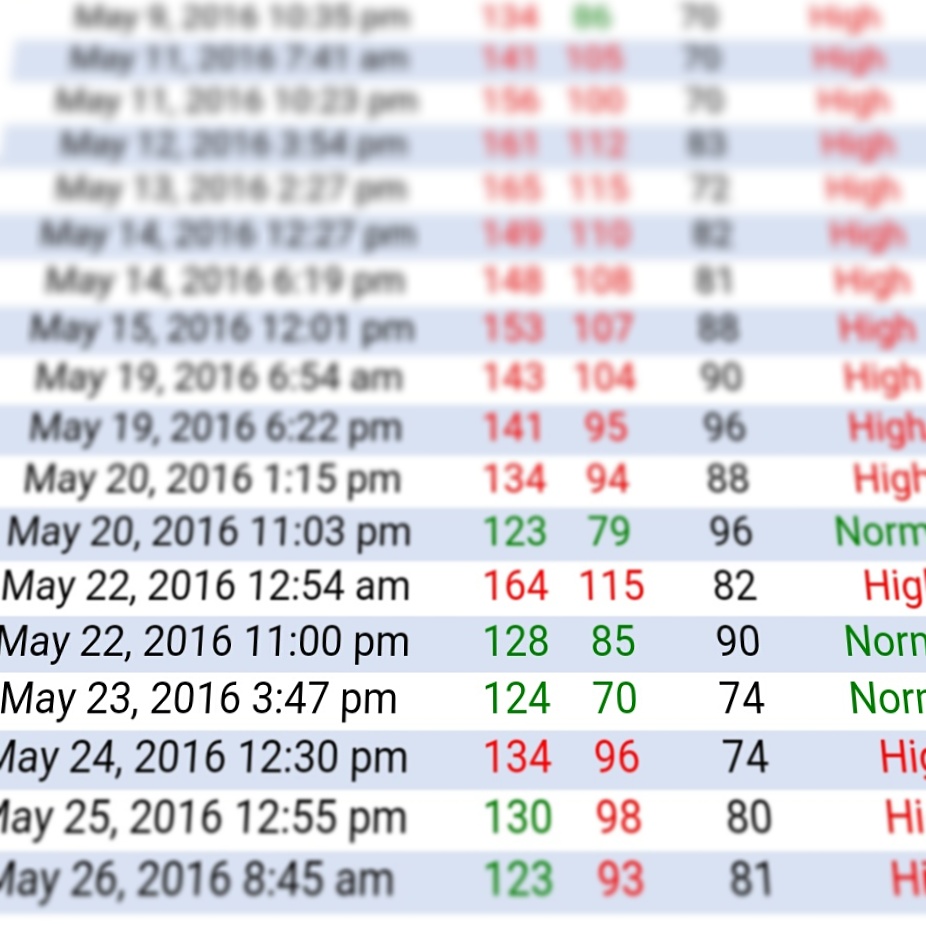
Ten days later and so far (touch wood) the indescribably severe itching that landed me in the hospital out of hours has stopped,  I’m not ‘passed out’ for 18 hours a day,  I’m no longer vomiting randomly and fairly frequently, and my BP meds now have a fair chance to work instead of being overwhelmed by the Arava. Hence my excitement at my BP slowly but surely dropping to near normal most days this week!

image

Anyone with knowledge of RD is aware that we are at much higher risk of heart disease, so keeping my blood pressure on an even keel is really, really important.

As with all DMARD’s what works fabulously for one does nothing for another,  I know people who swear by Arava and that’s fabulous.  I was on it for just over six weeks, and while I appreciate that was early days I felt no benefit.  However it definitely didn’t agree with me to the extent that I was not prepared to give it longer just in case. Unfortunately we are still at a stage where we must trial each med like Guinea pigs,  waiting out both the RD activity and the side effects for up to four months before knowing if this is the med for us.  When you consider that with dmards and biologics there are over fifteen meds to try, some of which work better in combination, that can involve a lot of waiting!

Where I go next is a conversation with my rheumatologist, I’m slightly apprehensive as I’ve now tried all the basic dmards and the next step up is biologics.  I’m not nervous of taking them, I’m more concerned that for one reason or another I won’t meet the UK criteria.  I have RF+ RD,  I’m in constant pain, suffer intense fatigue, daily stiffness, I have ultrasound evidence of active disease, but I don’t always get the obvious swelling and my bloods often bear little resemblance to my disease activity/how I’m feeling.  And of course the only reason the strict criteria is in place is cost! As they say in the papers…. Watch this space!

Flying the Spoonie Way ♿✈♿

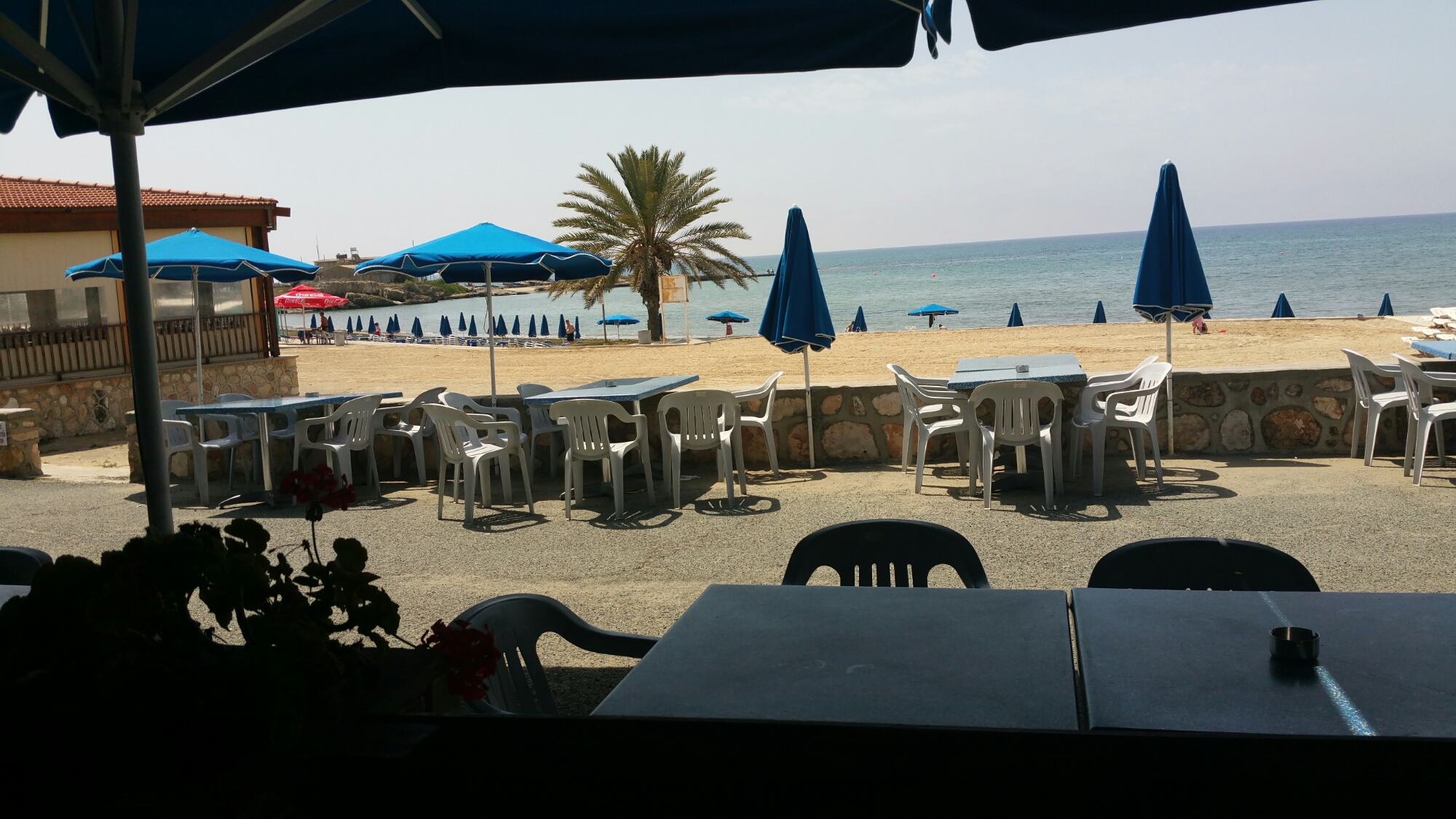
I’m in beautiful Cyprus at the moment staying with family, and someone asked about how I found the flight now I have RA and Fibromyalgia with mobility issues. I’ll share my tips as it’s absolutely doable, it just takes a little thought and planning, especially if like me you travel alone.

1. Use Airport assistance ♿ – it’s free of charge and I couldn’t travel without it.  You get transported in a wheelchair right through airports both ways.  An absolute must, it saves spoons and keeps pain levels down.

2. Book extra legroom seats. Worth the few extra pennies,  it does make a massive difference to how much you can wriggle and stretch, very important if you don’t want to arrive as stiff as a board!

3. Hydrate.  Lots.  Water is your friend on a plane – that actually applies to anyone – alcohol is so dehydrating.

4.  Face mask.  Yes, you probably look a little nuts, but when you have a suppressed immune system you do not want recycled germs. Planes are the worst. I always wear one when I fly – paper ones like dentists have, cheap as chips. Pop on some shades too & look mysterious 😉

5. Neck pillow.  I have an inflatable one, my neck is affected by RA and it saves so much pain, even if you don’t sleep it helps you support your head. I always book a window seat so I can ‘lean’ and get comfortable.

6. Meds bag.  I have a large multi zipped handbag I use to transport my meds – never put them in the hold, always carry on.  Take everything in original packaging with prescription labels attached,  it saved me a lot of odd questions on a complete bag search last time! I include meds, BP monitor, tissues, voltarol gel, pain relief etc.  Only thing that goes in the hold is oxycodone as it’s liquid. You can get notes from GP to allow you to carry on but this was just easier.

7. Give yourself permission right now to have “rest days” whilst your away.  It’s really,  really easy to overdo it, and then you end up spoiling days on end. Let your schedule be as flexible as it can be,  it’s better value to fully enjoy 11 days out of 14 rather go all out and miss half the holiday.

I’m in Cyprus staying with family, and I know I will spend tomorrow on the sofa because I’ve had two fabulous but exhausting days with my nieces/nephew.  They go back to school tomorrow so I can rest :mrgreen:

image

It’s very important not to guilt trip yourself into a painful flare,  by pacing and resting you will relax properly and enjoy more of your holidays – after all that’s what they’re for!

Happy Holidays!

Flying the Spoonie Way!

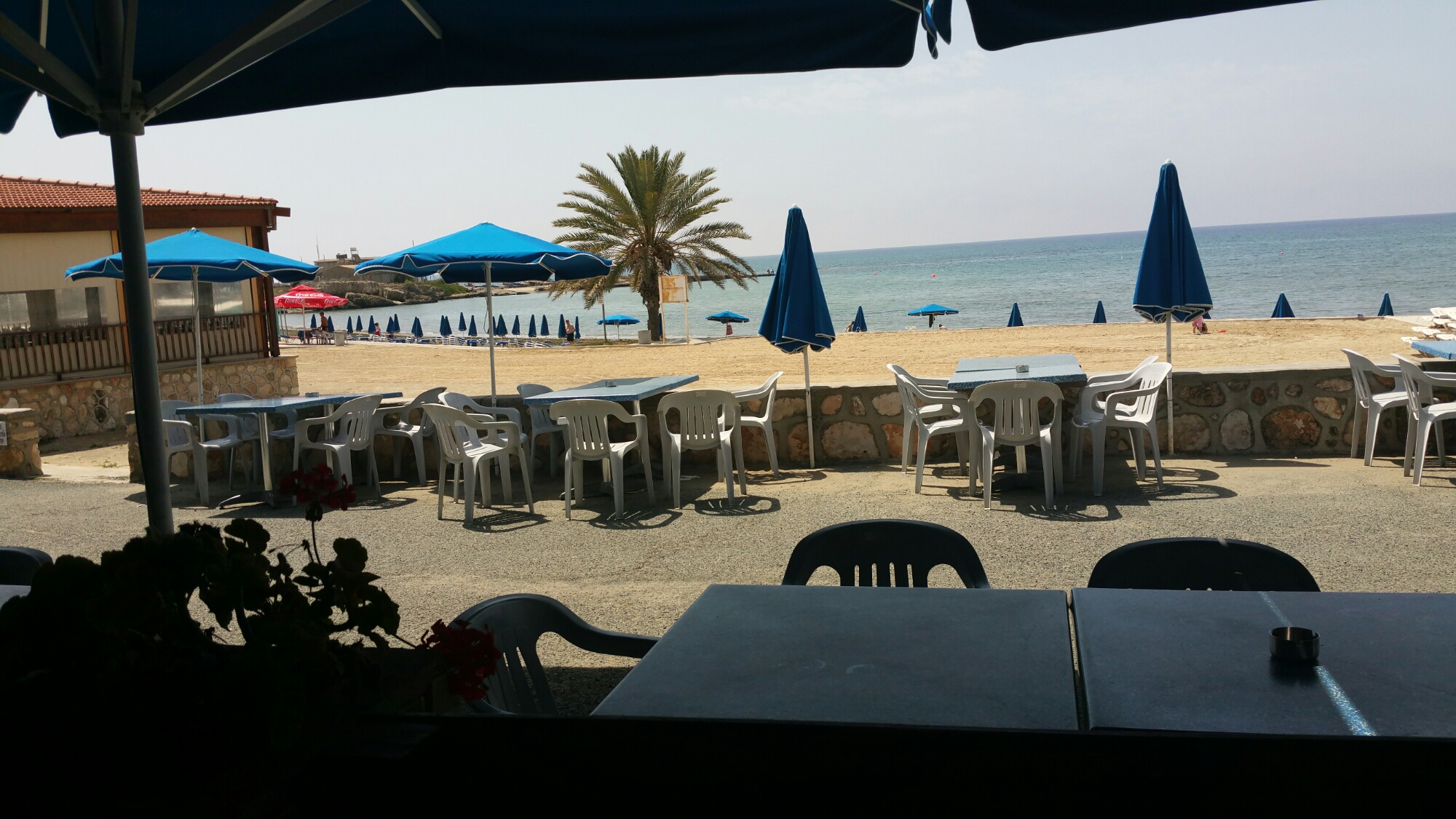
I’m in beautiful Cyprus at the moment staying with family, and someone asked about how I found the flight now I have RA and Fibromyalgia with mobility issues. I’ll share my tips as it’s absolutely doable, it just takes a little thought and planning, especially if like me you travel alone.

1. Use Airport assistance ♿ – it’s free of charge and I couldn’t travel without it.  You get transported in a wheelchair right through airports both ways.  An absolute must, it saves spoons and keeps pain levels down.

2. Book extra legroom seats. Worth the few extra pennies,  it does make a massive difference to how much you can wriggle and stretch, very important if you don’t want to arrive as stiff as a board!

3. Hydrate.  Lots.  Water is your friend on a plane – that actually applies to anyone – alcohol is so dehydrating.

4.  Face mask.  Yes, you probably look a little nuts, but when you have a suppressed immune system you do not want recycled germs. Planes are the worst. I always wear one when I fly – paper ones like dentists have, cheap as chips. Pop on some shades too & look mysterious 😉

5. Neck pillow.  I have an inflatable one, my neck is affected by RA and it saves so much pain, even if you don’t sleep it helps you support your head. I always book a window seat so I can ‘lean’ and get comfortable.

6. Meds bag.  I have a large multi zipped handbag I use to transport my meds – never put them in the hold, always carry on.  Take everything in original packaging with prescription labels attached,  it saved me a lot of odd questions on a complete bag search last time! I include meds, BP monitor, tissues, voltarol gel, pain relief etc.  Only thing that goes in the hold is oxycodone as it’s liquid. You can get notes from GP to allow you to carry on but this was just easier.

7. Give yourself permission right now to have “rest days” whilst your away.  It’s really,  really easy to overdo it, and then you end up spoiling days on end. Let your schedule be as flexible as it can be,  it’s better value to fully enjoy 11 days out of 14 rather go all out and miss half the holiday.

I’m in Cyprus staying with family, and I know I will spend tomorrow on the sofa because I’ve had two fabulous but exhausting days with my nieces/nephew.  They go back to school tomorrow so I can rest :mrgreen:

image

It’s very important not to guilt trip yourself into a painful flare,  by pacing and resting you will relax properly and enjoy more of your holidays – after all that’s what they’re for!

Happy Holidays!

Healing begins with Love 💙

I’ve been pondering for a few weeks where to start with this blog post.  I know what I want to say, I’m just hopeful it comes across as I mean it to!

In March this year, following 18 months of chronic illness with RD, Fibromyalgia & degenerative disc disease all playing together, plus the recent death of my Mother I kind of reached a tipping point.  I’m deliberately not using the word breaking! But I’d had month after month of pain, depression, anxiety, aching, medications,  fatigue, painsomnia and nothing was really changing – I wasn’t feeling ‘better’.

It was a sink or swim moment.  I could either drift along as I was, feeling pretty miserable most days, or I could look for help.  But what? Who? Where? So I hit trusty Google and followed where it led.  And boy was the universe ready for me to reach out! I started looking at mindfulness retreats, found lots of very out there options which included raw foods and tents, which aren’t necessarily my scene!  But whilst stumbling from link to link I came across the wonderful lady who was to change my life.  There is no other way to put that, and I truly believe we were drawn together.

Demi Schneider is simply one of life’s good ‘uns, and an insightful, generous and empowering lady.  A Clinical Hypnotherapist & Psychotherapist, Metaphysical Life Coach & Author of “Beat Your Depression For Good” – she powerfully challenges and guides us to look within for our own joy. To care for and love ourselves.  To be happy!

image

In simple terms what we think is all powerful. And it’s our choice! And that choice dictates how we feel, emotionally and physically.

It’s easy, rational and possible, but it takes learning, acceptance, meditation and work.  We have years of learned negative thinking patterns to turn around before we are able to allow ourselves to truly be open and actively listen to what our body is telling us. 

It’s known that the subconscious mind can’t tell the difference between imagination and reality.  So by changing our thought patterns to positive (for example repeating ‘I am calm and in control’ when feeling anxious), we physically change the chemicals our brain releases – increasing serotonin.  And when you feel better, you feel less pain. 

Does it relieve pain? A little, yes, and I’m in my early days.  Is it worth it? Absolutely, allowing peace and acceptance into our lives brings joy and happiness to our minds and our hearts, regardless of circumstances.  Loving ourselves rocks!

It’s not a magic cure, but it is a much nicer way to live, especially with chronic illness when things can seem very bleak.

Namaste 💙

Narcissism or Progress?

A really interesting question was raised in a forum this evening (thanks Lisa). One of those moments when you’re pretty sure you disagree with a point that’s been very well made but you have to stop and think, why?!

I’ve been struggling a little with ‘bloggers block’ recently so I’m actually doubly grateful to the lady who set my writing brain in motion.

In essence she asked if, in today’s society, we as RA patients have become narcissistic and lazy. Looking back at her grandmothers’ with RA who farmed, harvested crops, made canned goods and ran a family with time for everyone to feel loved and no complaints, she feels that we perhaps focus more on what’s wrong instead of counting our blessings.

“Sometimes I think my grandmothers with their knarled little hands dealt better…. … and continued to live and love life”

So do we dwell too much on our conditions? On the face of it a not unreasonable question, but then I applied it to myself and my instinctive response was an immediate no. So now I have to process why… Or work out if I’m just self delusional!

I think we are comparing apples and oranges. Our grandmothers lived in a very different world. Mine was born in 1905, well over a hundred years ago. Home electricity would not become commonplace for another 25 years. Women having equal voting rights was still 23 years away and there were another 43 years before the National Health Service was created. Your choices for medical care in the UK were private for the rich, or relied on charity for the poor.

I’m going to digress a little here, please stick with me. In 1914 Rheumatoid Arthritis was believed to be caused by Tuberculosis. Intravenous Gold Therapy was used with RA patients simply because it worked for TB. A clinical study in France in 1932 proved that, accident or not, it had therapeutic value. In 1948 after years of research with biochemist Edward Kendall, Dr Hench of the Mayo Clinic in Minnesota tried Cortisone on an RA patient for the first time. He and Kendall were awarded the Nobel prize for this breakthrough in 1950.

image

But still clinical treatment was for damage after the fact. Not until the 1980’s was Methotrexate, the first DMARD (Disease Modifying Anti Rheumatic Drug) introduced. In the later 1980’s research was making breakthroughs, the TNF (Tumor Necrosis Factor) was discovered and new treatments started to be developed, leading us towards the biologic options we have today.

Fascinating stuff right? But it has a point. My theoretical grandma with RA would have been 45 in 1950. It’s fairly common for people to be diagnosed at around this age. Her only option for treatment was cortisone. There was no way to stop the crippling damage. Fast forward another 30 years to her 80th birthday in 1985 and maybe, just maybe, she would have been offered Methotrexate for her final years. But much too little way too late.

So let’s think about her options as this debilitating and crippling disease with its pain and fatigue took over her body. Societal norm was to keep medical matters private. You didn’t mention things to your family, let alone friends. You put up and you shut up. So, feeling alone in her pain she carried on. There was no other option, cooking for the family, looking after the grandchildren as they came, washing and cleaning daily because it was women’s work. Who else would do it?

I was born in 1970, and I was diagnosed at 45. But my life is very different. I have washing machines, computers, newer medicines and diagnostic tools, the Internet and rigorously trained doctors with a wider knowledge of RA. I don’t have family next door and children to look after, but I’ve had to work all my adult life until my disability made that impossible.

But you know what I think is most important, in some ways way even more so than the newer drugs and research? I don’t have to suffer alone or in silence. I can reach out to my friends and family for help, they know what’s wrong because it’s OK to discuss health issues openly. I can reach out through forums and blogs and twitter and share experiences and knowledge and pain and frustration as well as the joy with the online RA community. I’ve both received and given support, and I’m grateful for the opportunity to do both.

So do I think I’m narcissistic or lazy? Do I think our Grandmothers were somehow stronger? No and no. We are a product of our upbringing and the society we live in and, thankfully in this case the rules have changed. And I definitely think that’s for the better.

With reference and thanks to ‘The Rheumatogist’ article A Short History Of Rheumatoid Arthritis Therapeutics by Simon M Helfgott MD for some of the historical information included here, any errors are wholly mine.

Unbreakable Bonds

As some of you will know the reason I’ve not posted for a while is that my Mum had been poorly, and she has recently passed.  She unfortunately suffered from dementia in the last couple of years of her life, and as anyone who has been through this knows you feel you’ve lost the person you love before they’ve gone. 
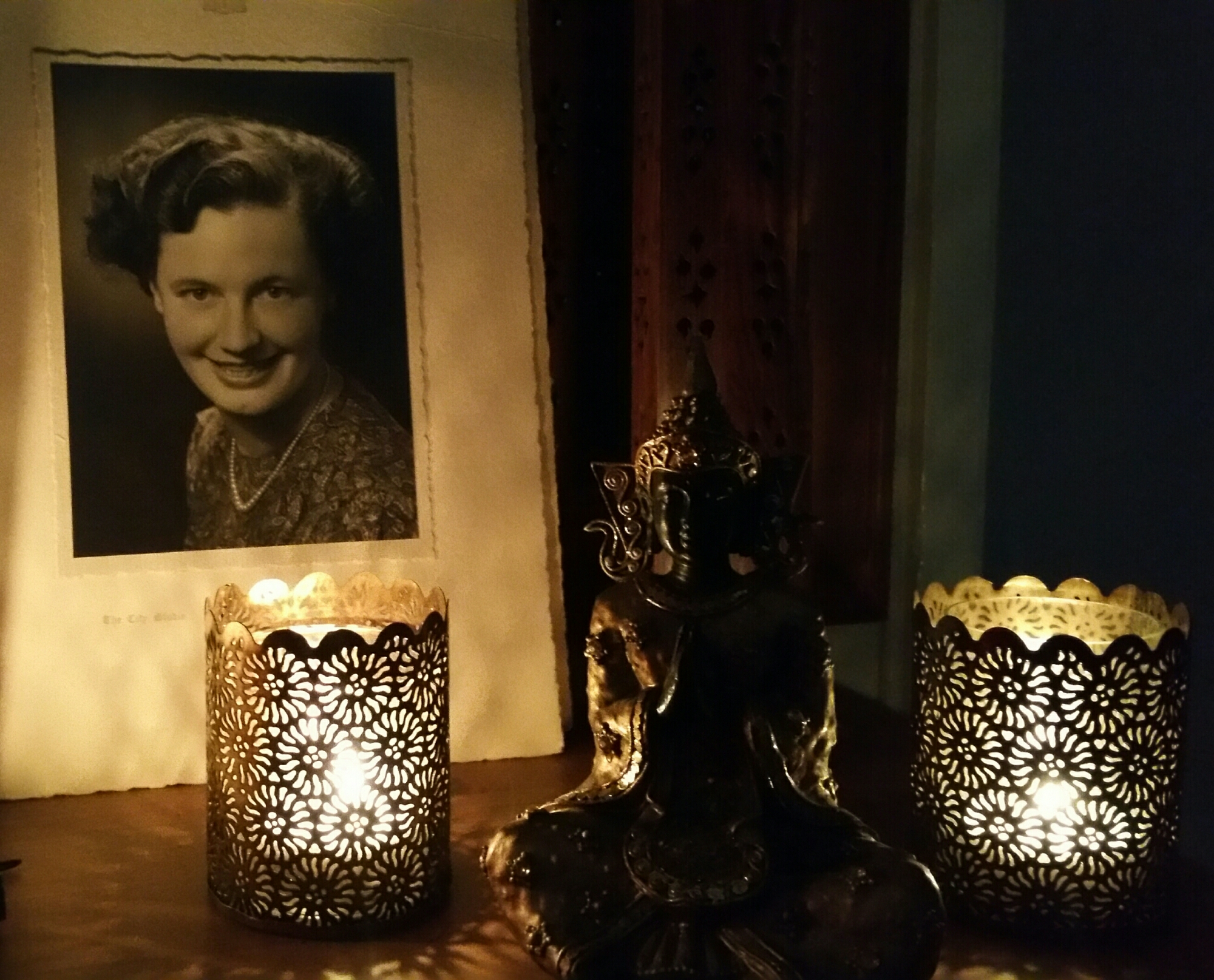
I found this so hard, but tonight I have sat quietly, lit candles and drifted through memories of her long and happy life, both those I share and those I will never know. I feel she has been here with me, helping me to remember the person I love, and it has given me so much peace. So I ask you to indulge me….

I remember seeing this picture of Mum when I was a child, and wondering that she was ever this young, glamorous girl.

image

We so often don’t think of our parents as people, having lives and loves and stories that started long before us.

I’m fortunate that Mum shared some of her story, such as starting work in the London Stock Exchange when she left school, and working there for over 25 years, becoming a Gilt Edged Securities Clerk, managing three girls under her and literally processing millions of pounds.

Or her travels to Kenya as a single woman in the 1950’s, visiting her dashing older brother, a pilot first in the RAF then privately after the war. I will never forget her very matter of factly telling me how she had hidden in the back of a car for hours from hostile attack during the Mau-mau uprising, very much my Mum, always understated!

There are some lovely b/w shots somewhere of her holidaying in Jersey before she met Dad, and I would love to have known this beautiful, bright career woman.

The Mum I knew had such warmth, kindness, generosity and love. She had stopped working, but she never stopped moving. Cooking, baking, sewing, knitting, embroidery, card making… A truly creative and talented lady.

Just from my recall in Randwick where we grew up she volunteered at school doing reading and crafts, helped run and was treasurer of the playgroup, became Brown Owl for the Brownies, and was an active member and fundraiser for the Mothers Union and the Women’s Institute  – all while raising two slightly lively(!) girls.

In later years she moved to Great Bedwyn, became President of the WI for a time and was a massive support to The Bedwyns Link Scheme, an active village voluntary scheme providing cross community support locally to all who needed it for over 15 years.  Wiltshire Life presented her with a well deserved Carer of the Year award for this tireless work.

The sheer number of cards we have received, sharing memories of her and mourning her loss have been an amazing testament to the hearts she touched along the way. Nearly all of them mentioned her smile, which to the last could light up a room. 

Mum I will miss you more than words can say.  You truly were an inspiration. I learned from watching you how to be fair, how important it was to be caring and generous with others. 

Through my adult life you have been a gentle constant presence, never judging, just loving and welcoming as always. I’ve probably taken that for granted sometimes, but you have been like a light in the window that has always been there to welcome me home and make me feel loved.

I want you to know how much I love you.  It’s that simple, and that huge and that magical.  That bond is something that time and the universe can never break.

Always, your loving daughter, Denise.

Trying to catch the rain….

This may start by sounding a bit egocentric, but sometimes I’m fascinated by the way my mind works! I mean the underlying subconscious thoughts we have, without any kind of input from our conscious self.  Just now and again I catch myself doing something and I stop and think why? And then I realise the why and gently correct myself. 

I guess it’s a technique I picked up from my CBT course last year, not chastising myself for having thoughts that are unhelpful or incorrect, but gently addressing them and turning them round, hopefully learning as I go. 

It’s happened this morning with something I posted in a closed group on facebook, I’ve pasted it exactly below…

Just wanted to share a positive day for a change 🙂
Finally finished the to do list I started about two months ago, including sorting address changes, closing a couple of accounts and filing a tax return for last year. 
Huge sense of relief from sorting stuff, I suffer with anxiety and paperwork kicks it off, so I’m really proud of myself for doing this today!

I shared this for two reasons, mainly because I do feel proud of achieving this, and also because I thought it might help someone else who has similar issues.  I received some lovely responses, saying what an achievement it was, and that I’d done really well to tackle it.  Then ‘it’ occurred to me.

Why had I shared this in closed groups but not on my own timeline? Let’s be honest, we all like to share our achievements with our friends and family, it’s a lot of what Facebook is.  So why not this?

I realised almost as soon as I’d asked myself the question what the answer was – sharing this as an achievement meant sharing that I find something as simple as sorting paperwork a struggle. And for me that’s quite a big admission, a weakness if you will.

I’m someone who had identified myself very closely with my work for a long time, and work meant budgets, spreadsheets, contracts, project management, business analysis, strategic planning and problem solving.  How do I then turn round and admit my brain just doesn’t work in the same way anymore?

Since my RA/Fibromyalgia symptoms started I’ve been increasingly suffering with ‘brain fog’ – a recognised term amongst those with chronic illness.  It’s like trying to catch a handful of rain, little drops make my grip but the rest eludes my grasp. Words dissappear from my mind at the precise second I want to speak them.  Memory jumps, so I can lose track completely mid sentence. 

It makes trying to deal with anything that requires concentration difficult.  And once it becomes difficult I become anxious.  And the anxiety affects concentration.  You can see where this leads…..!! Paperwork is bad, having to make phone calls related to it is nigh on impossible. 

So I procrastinate, I make lists, I shuffle them around. I move papers from one room to another.  I sort them into order, then I sort them again.  Anything but sit down and deal.  And suddenly two or three months have slipped by and I’m annoyed with myself for not getting things done, but no closer to actually doing. 

What changed yesterday? In simple terms I had a less ‘foggy’ day, the fatigue wasn’t as heavy as usual, the pain was lower for a few hours.  So I used the time, and I’m really glad I did.  It’s like a weight has been lifted, I tend to turn the things I put off into mountains to climb, when in fact a couple of hours with a coffee and the laptop and I was slowly but surely caught up. 

So, going back to my starting point here, I have been kind to myself this morning.  Yes I did well yesterday, and I should feel proud.  And that means feeling proud ‘out here in the real world’,  where if I’m honest no one who matters is going to think any less of me, and anyone who has suffered with brain fog &/or anxiety will understand completely. 

image